Friday, September 5, 2014

Week One- Establishing Professional Contacts and Expanding Resources

            I have had extreme difficulty establishing contact with two professionals. Of the many websites that I selected from NAEYC’s Global Alliance resources, almost all lead to null pages, broken links, or inactive sites and I have now sent emails to five different individuals on the list; four came back immediately as undeliverable. Have any of you had luck? Here are the contacts that have been unsuccessful thus far:

OMEP Comité Nacional Cubano
Sra. Hilda Pérez Forest
E-mail: hilda_perezforest@yahoo.com


I’m hopeful that the one email that did not come back as undeliverable will be answered by the early childhood professional. If not, I added several global early childhood groups on Facebook as another method for finding potential contacts.
            For part two of the blog assignment, I looked at several of the early childhood organizations listed on the resources page. Many were interesting but some were out of date such as the Center for Child Care Workforce which still has its May/June 2011 newsletter on its front page. I decided to choose what is listed in our resources as National Association of Child Care Resource & Referral Agencies (NACCRRA) but is now called Child Care Aware. It can be found at http://www.naccrra.org. I chose this because I frequently use my county and state resource and referral agency for trainings, resources, guidance, news on laws and policies, and more. They offer incredibly important services to providers, children, and the community, and I feel that it would be valuable to be more knowledgeable about the organization and its offerings as a whole.

Thursday, September 4, 2014

Welcome to my blog! I look forward to exploring Issues and Trends in Early Childhood with all of you!

Friday, June 13, 2014

My Supports

In my daily environment, I have many supports including financial supports (my job, my husband’s job, daycare tuition assistance through the Child Care Assistance Program, free/reduced school lunch program), emotional supports (love and friendship of family and close friends), and medical supports (medicaid, employer-provided medical insurance, physical therapy, medications). Life would be very difficult for me without these supports. They are all important and play essential roles in my life. Without financial supports, I would not be able to feed or clothe my children and every day would be a struggle to survive. Without emotional supports, I would feel alone and over-stressed. Without medical supports, I would be unable to live due to chronic health conditions.

The challenge that I chose to imagine was being a single mother with no close family near me. In this situation, I would likely need a multitude of supports similar to what I currently have, but they would not come nearly as easily. For instance, my parents watch my children twice per week to help cut down on daycare costs as well as to spend time with their grandchildren. A single mother with no relatives nearby would have to build a network of trusted individuals. Single parents generally would have less income, as well, as only one parent is contributing to household income, and sometimes not even then in the case of a stay at home mother with no other options or resources. That parent may not have social or emotional supports and may feel isolated. Life without these supports would be very difficult.


Saturday, May 31, 2014

Week 4: My Connections to Play

“Playing should be fun! In our great eagerness to teach our children we studiously look for ‘educational’ toys, games with built-in lessons, books with a ‘message.’ Often these ‘tools’ are less interesting and stimulating than the child’s natural curiosity and playfulness. Play is by its very nature educational. And it should be pleasurable. When the fun goes out of play, most often so does the learning.” ~ Joanne E. Oppenheim
“Play builds the kind of free-and-easy, try-it-out, do-it-yourself character that our future needs.” ~ James L. Hymes Jr.
“It is in playing, and only in playing, that the individual child or adult is able to be creative and to use the whole personality, and it is only in being creative that the individual discovers the self.” ~ D.W. Winnicott
As a child, most of my play involved imagination and outdoor spaces. My brother was the main supporter of my play. He is 16 months older than me and for the first 6-7 years of our lives, we primarily played together rather than with friends. My father worked out of town and my mother was often busy with managing our household so most of our day would be spent outside making forts out of sticks and plants, making bricks from the clay dirt (we lived in Virginia), water, and ice cube trays, and making concoctions from honeysuckle and other native plants. While I’m sure we did other things, these are the things we did together that really seemed to resonate and matter.

I try to instill the love for this type of play into the children with whom I work and particularly with my own children. My husband and I emphasize the importance of imaginative, free-structured play. We also encourage our children to use items in unusual ways, such as my brother and I did when using ice cube trays for brick-making. However, I do see that in general, the state of play has become much more materialistic, focused on playing with a toy for its set function or playing a game on a screen. My hope is that with so many health initiatives focused on getting children and families to become more active and to do things together, play will shift back to free-form.

As an adult, I have had very little time to play. From the time that I was legally able to work, I have done so, often working multiple jobs at one time. Since having children six years ago, I have even less available time but I have made an effort to reclaim play and bring that kind of free joy back to my life. My husband, kids, and I take trips to rivers and creeks to search for tiny insects and creatures in the water and under rocks. We try to identify tracks in the mud on trails in the woods and imagine what animals may have made them. In those moments, I can feel the deep connection between my past and present life and the future that I have in my children.


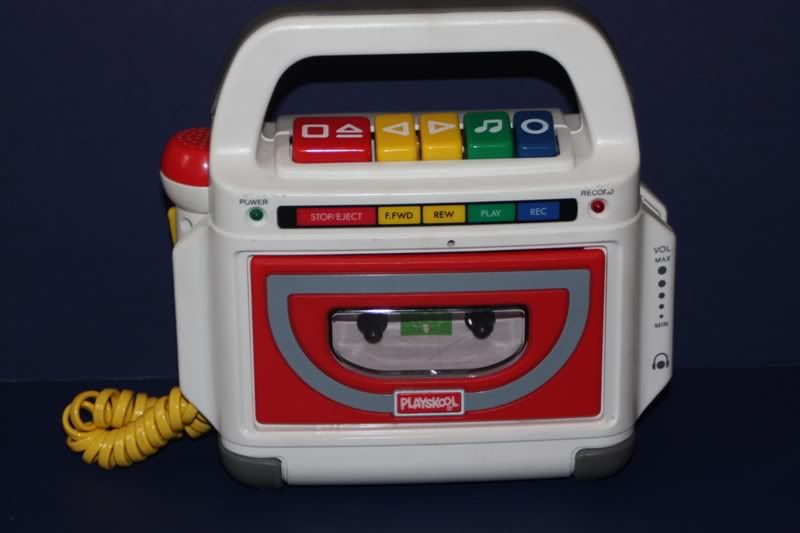
My brother and I would record stories that we made up with each other.


This clay-type soil is amazing for building!

Thursday, May 15, 2014

Relationship Reflection

Ever since I was a young child, the development of relationships has been very important to me, particularly the development of close family relationships. This has stayed with me as I have grown and as a professional, I have made relationships and partnerships a central theme to what I do and how I operate. 

In my personal life, my relationships with my children, parents, brother, and husband are of utmost importance. I also value my relationships with extended family, in-laws, close friends- most of whom are also co-workers, and the children and families in my programs. The relationships I that I forge are deep and long-lasting. 

My husband and daughter

My son

I love my children immensely. My children love me and expect that I will keep them safe and do what is best for them. They each have very unique personalities and individual ways to interact with me and I with them. While motherhood is much more difficult and all-consuming than I could have imagined, the relationship that I have with my children is the one that I value the most.

My relationship with my husband is one that has changed since we became parents. It has become more reciprocal; prior to other humans being involved, our relationship was very much one-sided. As parents, we really have formed a partnership. Without this partnership, we would not be effective parents. Instead, we would constantly be overruling each other's decisions or creating chaos with our lack of consistent rules, boundaries, and structure.

My ability to connect with others and create, foster, and maintain relationships and partnerships positively impacts my work as an early childhood professional. This allows me to form bonds with children and families, as well as my staff and co-workers, creating an environment that is formed around creating a caring community.

Thursday, April 24, 2014

Week Eight: Thoughts About Child Development


The video above is of my son and daughter playing an organ when they were 3 and 1. I love to watch this from time to time to see how their play has evolved as well as the developmental differences between their ages/stages; I especially love the part where my daughter experiments with with the sounds that she can make by sitting on the keys with her bottom and her knees. My son, who was older and more "mature", sang a silly song but played the organ appropriately with his fingers.


More thoughts through quotes:


"All children accomplish milestones in their own way, in their own time." - Magda Gerber


"For children, play is as natural as breathing—and as necessary" -Mimi Brodsky Chenfeld

Saturday, April 12, 2014

Week Six: Testing for Intelligence

When testing for intelligence, professionals should look at the whole child. This does not mean altogether abandoning traditional methods of testing for intelligence as that may be a valid measure for some children. What it does mean, though, is also including opportunities for other kinds of intelligence to be explored and measured. What I would like to see is a system that is as responsive and accommodating as the Response to Intervention (RTI) technique being used in special education. In RTI, every student who is determined to be below average in achievement receives special assistance of some sort; at times, this can be as much as half of the classroom (Berger, 2012). If students were to receive these services, regardless of their level of academic achievement, each child's individual strengths and weaknesses could be uncovered and/or supported. If talents are not uncovered or not fostered, they may forever go unknown, grow stagnant, and disappear.

Finland does not have "high-stakes national standardized tests" (Gross-Loh, 2014, para. 2). They individualize instruction based on the strengths of both the teachers and the students. When they do test intelligence, they have standard intelligence tests such as the Stanford-Binet and Wechsler as well as tests for musical giftedness, prosocial behavior, and creative and divergent thinking. Input and observations from parents and teachers, and student portfolios are also used as part of the assessment process and are of as much if not more importance in determining giftedness than actual testing (Roukonen, 2005).


References

Berger, K. S. (2012). The developing person through childhood. New York, NY: Worth Publishers.

Ruokonen, I. (2005) Estonian and Finnish gifted children in their learning environments. (Doctoral dissertation). Retrieved from https://helda.helsinki.fi/bitstream/handle/10138/20047/estonian.pdf?sequence=1